
First Aid vs CPR: which course should you book?
If you are weighing up first aid versus CPR, the right choice depends on the skills you need, the setting you work or study in, and how much coverage you want. This guide explains what each course teaches, who they are designed for, and when it makes sense to choose first aid courses that include CPR.
By the end, you will have a clear shortlist, practical questions to ask before booking, and a simple way to decide whether a CPR course alone is enough or if a broader first aid qualification is the better fit.
Choosing between first aid courses and CPR
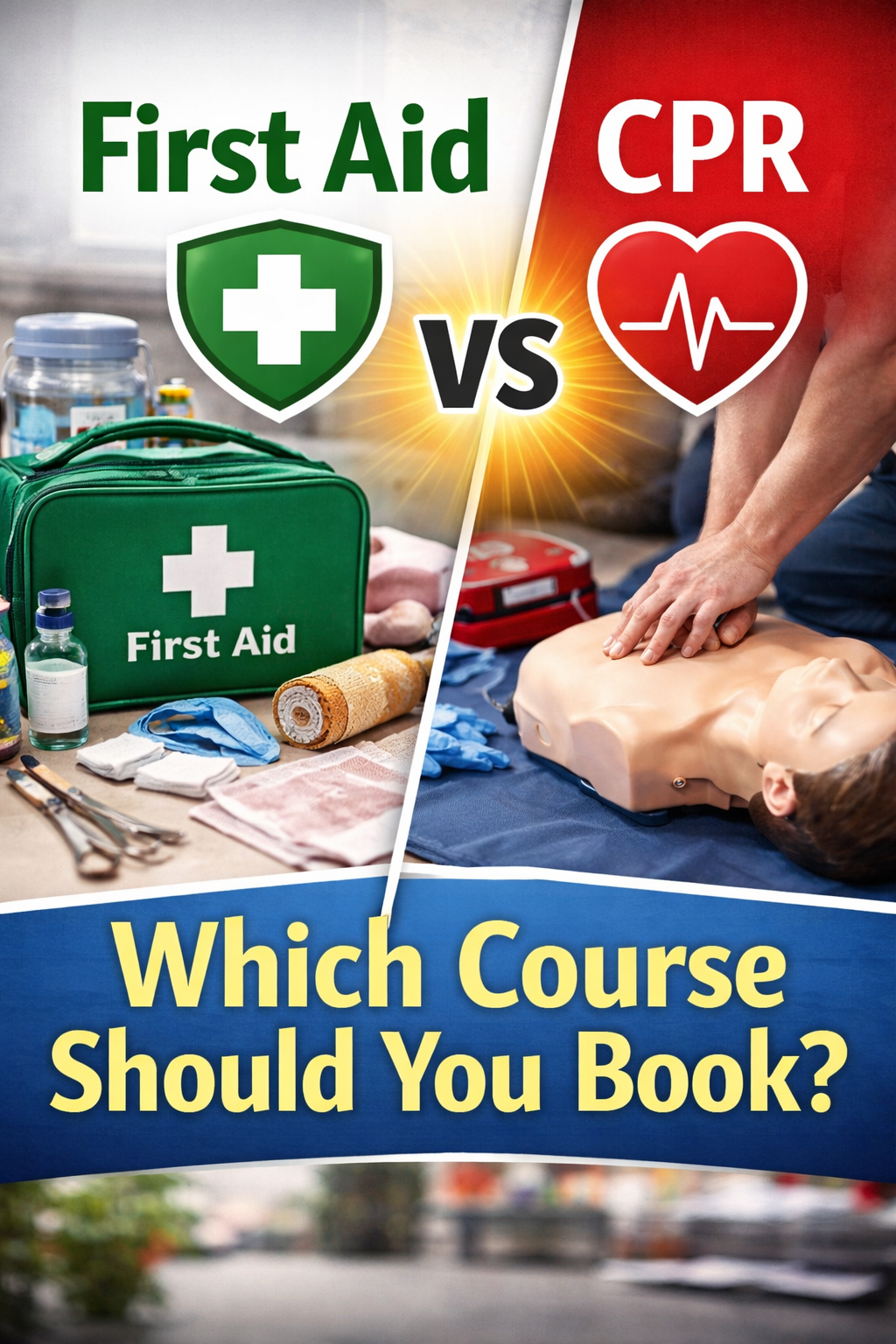
A CPR course is focused and fast-paced. It teaches you how to respond to a cardiac or breathing emergency, perform compressions and rescue breaths, and use an AED safely. A first aid course is broader. It covers CPR alongside a wider range of incidents so you can manage the scene, assess the person, and provide care until professional help arrives.
If you only need core life-saving skills for a specific role, CPR may be enough. If your workplace, school, or organisation expects you to handle injuries or medical emergencies beyond resuscitation, you will likely be better served by first aid training.
What a CPR course typically covers
CPR training is designed to build confidence in a short time. You learn how to check for danger, assess for normal breathing, and begin compressions quickly. Most sessions also include AED basics, team response, and practical skills practice so you can act calmly when seconds count.
People often choose CPR for roles that require an essential emergency response skill set but do not need the wider clinical knowledge in a full first aid program. It can also be a good option if you need a quick refresher and your employer allows CPR-only training.
If you are comparing course options, you can explore our CPR training page to see delivery formats and session availability.
What a first aid course adds on top of CPR
First aid training usually includes CPR plus a wider set of responses for common workplace and community incidents. Expect to cover topics like bleeding control, shock, fractures and sprains, burns, asthma and anaphylaxis response, and basic patient assessment. The goal is to help you recognise what is happening and take sensible, safe steps before medical professionals arrive.
These extra skills matter when you are responsible for a group or when your environment has higher risk. Many people choose first aid because it gives broader confidence for family, sport, or volunteer settings too.
If you are ready for a broader course, compare available first aid courses and pick a format that fits your schedule.
Who should book which course?
Use these practical prompts to decide which course makes the most sense right now. If you can answer “yes†to any of the first aid prompts, you will likely benefit from the broader course.
- You are expected to manage injuries as well as emergency response.
- You work with children, older adults, or people with medical conditions.
- You want wider skills for sport, volunteering, or community roles.
- You need a qualification that includes both CPR and general first aid competencies.
If none of those apply and you only need an essential life-saving skill for compliance, CPR may be the most efficient option. You can always build up to a first aid course later.
Questions to ask before you book
A quick check before enrolling can help you avoid rebooking or doing additional training sooner than needed. Ask your employer, school, or organisation what level of training they expect and whether they require a specific course code or unit.
It can also help to consider your current confidence level. If it has been a while since you practised, a more comprehensive class with extra hands-on time can be valuable. Either way, pick a course that gives you enough practice to feel calm and capable.
FAQ: first aid and CPR
Do first aid courses include CPR?
Most do, but you should always confirm what is included before booking. Some providers offer CPR as a standalone course, while others bundle it into a broader first aid program.
Is CPR enough for the workplace?
It depends on your role and the expectations of your employer. Some workplaces accept CPR-only training, while others prefer staff to hold a full first aid qualification.
How do I choose between CPR and first aid?
Start with what your role requires. If you need to respond to injuries or medical incidents beyond resuscitation, book a first aid course. If your role only needs essential emergency response skills, CPR may be suitable.
Takeaway
CPR is focused and fast, while first aid provides broader coverage for real-world incidents. If you need wider capability, choose first aid courses that include CPR so you are ready for more than one kind of emergency.